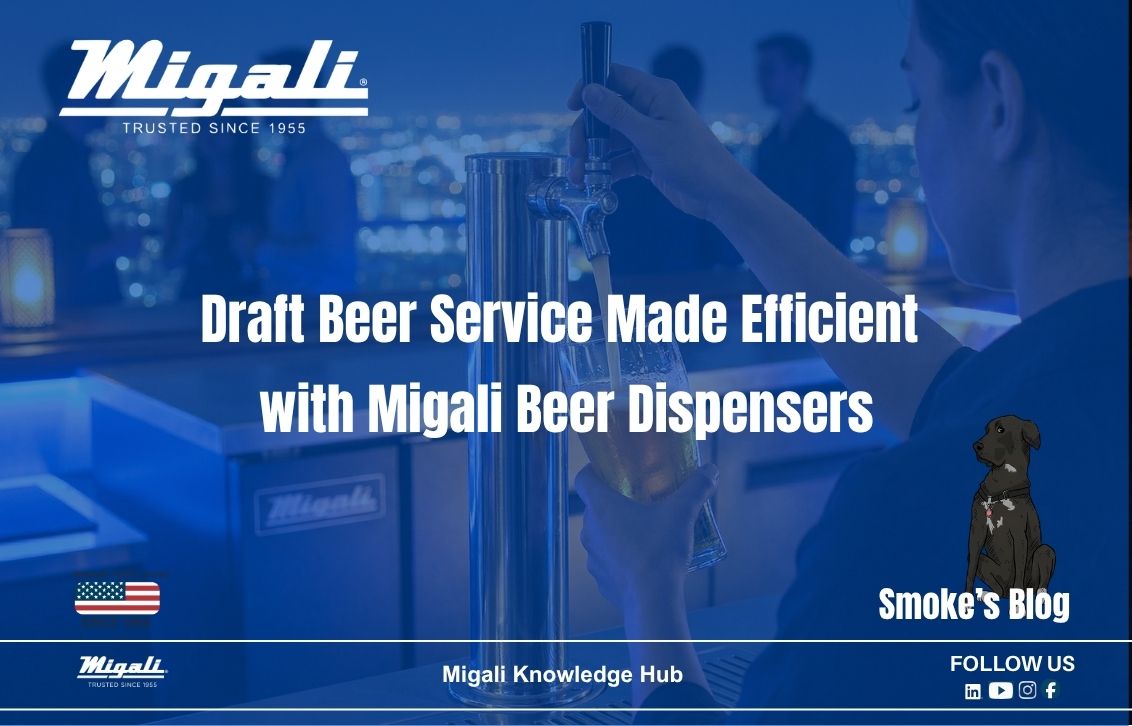
Efficient draft beer service depends on more than just keg storage. In busy bar environments, maintaining cold temperatures, smooth workflow, and consistent pouring performance all play an important role in customer experience and daily operations.
Migali® Direct Draw Beer Dispensers are designed to support dependable draft beer service while helping bars stay organized, efficient, and ready for high-volume hours. Available in multiple sizes and configurations, these units provide flexible solutions for everything from compact bars to large beverage programs.
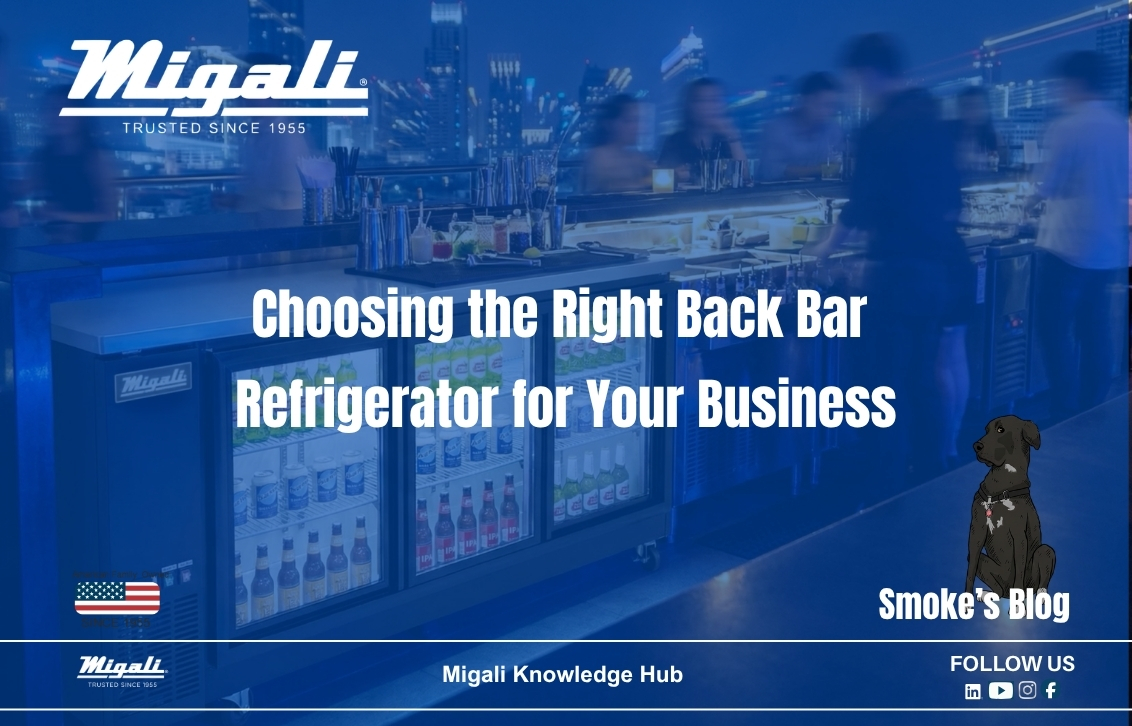
Back bar refrigeration plays an important role in beverage organization, workflow efficiency, and customer experience. Whether operating a restaurant bar, sports bar, nightclub, hotel lounge, brewery, or café, selecting the right back bar refrigerator can improve daily service while keeping beverages consistently chilled and ready to serve.
Migali® Back Bar Refrigerators are designed to combine dependable refrigeration performance with professional bar presentation. Available in multiple configurations, the lineup allows operators to choose the style that best matches their space, storage needs, and workflow requirements.
In today’s commercial kitchens, efficiency is everything. Space is limited, workflows are fast-paced, and every piece of equipment needs to serve a purpose.
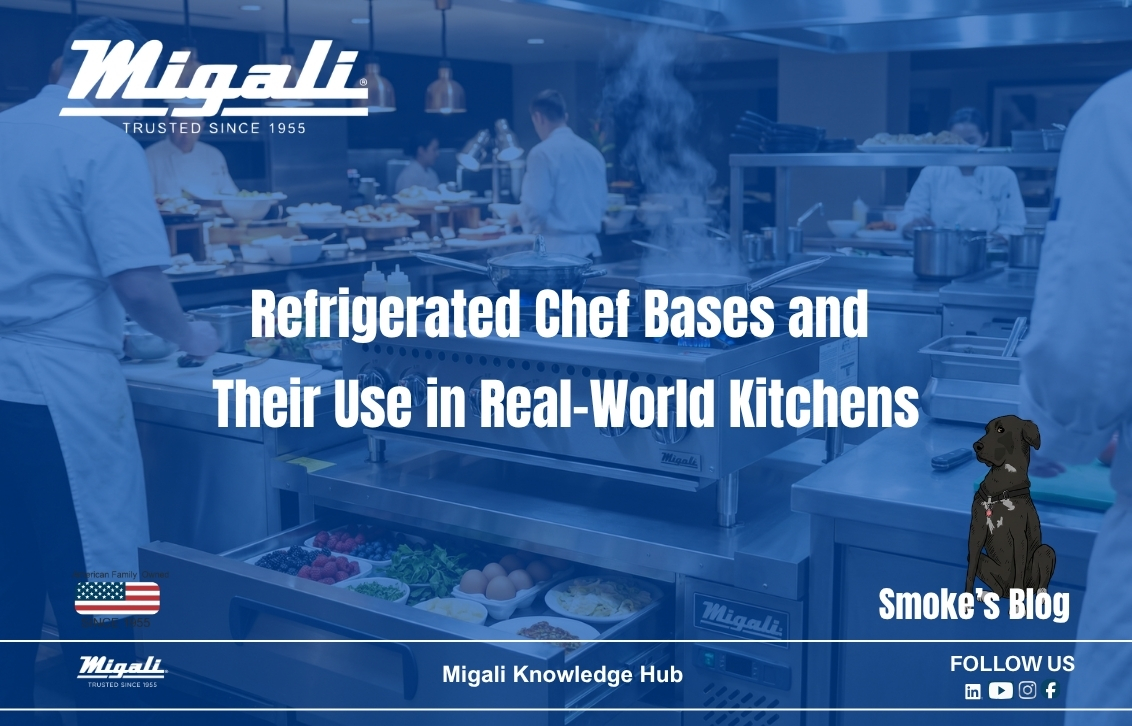
Refrigerated chef bases are one of the most practical solutions for maximizing both space and performance. By combining refrigerated storage with a heavy-duty equipment base, these units bring ingredients closer to the cooking line—helping kitchens operate faster and more efficiently.
Migali refrigerated chef bases are designed for real-world use, supporting both storage and cooking in one compact footprint.
At Migali Knowledge Hub, we’re committed to providing practical insights that help dealers and operators run safer, more efficient kitchens. As part of our ongoing series, we’re sharing key food safety best practices to support your daily operations.
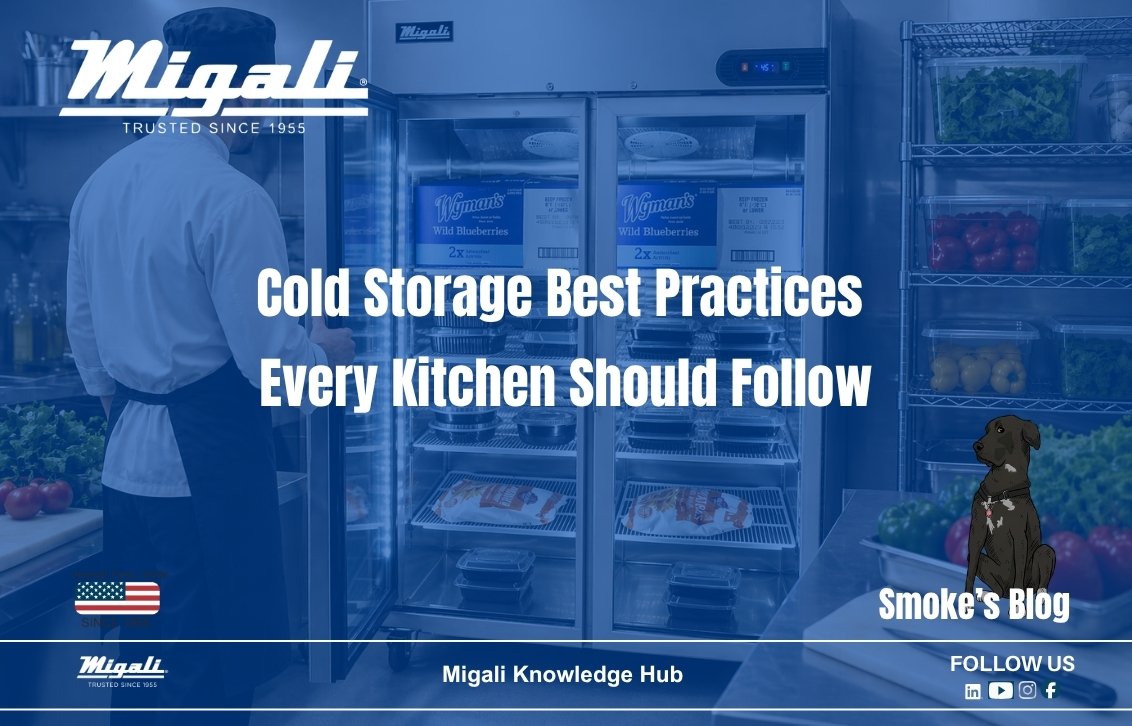
Proper cold storage is the foundation of food safety in any commercial kitchen. From preserving ingredient quality to preventing bacterial growth, how food is stored matters just as much as how it is prepared.
Even with reliable refrigeration, poor storage habits can lead to spoilage, contamination, and unnecessary waste. Following a few key best practices helps ensure safe, efficient, and consistent kitchen operations.
In modern commercial kitchens, space is often limited and efficiency is critical. While reach-in refrigeration provides bulk storage, undercounter and worktop units bring refrigeration directly to the point of use—supporting faster prep, better workflow, and more organized operations.
Migali undercounter and worktop refrigeration units are designed for real-world kitchens where every inch of space and every second of service matters.
In commercial kitchens, refrigeration runs nonstop — protecting ingredients, supporting daily operations, and ensuring food safety. But even the most reliable equipment can lose efficiency over time if it isn’t cleaned and maintained properly.
High-quality pizza prep tables are essential to the success of any pizzeria. From dough preparation to topping assembly, these units are the center of daily operations—supporting speed, organization, and consistency during every service.
In fast-paced commercial kitchens, efficiency and organization are essential. Sandwich prep tables are designed to keep ingredients chilled, accessible, and ready for service while providing a convenient workspace for assembling menu items.
Refrigeration is one of the most important investments in any commercial kitchen — and one of the few systems that runs 24 hours a day, 7 days a week. Yet despite its importance, refrigeration is often misunderstood or overlooked during planning and daily operations.
Small mistakes in selection, placement, or maintenance can quietly cost restaurants thousands each year in energy waste, food loss, repairs, and downtime.
In today’s foodservice market, competition is tighter than ever. Rising costs, aggressive pricing, and shifting customer expectations are forcing both dealers and operators to make difficult decisions.
The challenge isn’t just staying competitive — it’s doing so without sacrificing quality, reliability, or long-term performance.